An undertone test is most useful when it replaces guesswork with a few calm comparisons near a bare face. You are not trying to diagnose skin or earn a permanent colour label; you are looking for the temperature and softness that make your eyes, mouth and skin look more settled in ordinary daylight.
Undertone and surface tone are doing different jobs
Surface tone is the colour visible at first glance: fair, light, medium, deep, tanned, flushed or uneven. It can change after a holiday, a winter indoors, an active workout or a stubborn red patch. Undertone is the quieter cast beneath it. A warm undertone usually leans golden, peach, yellow or warmly olive; a cool undertone may read pink, rosy, blue-red or cool olive; a neutral undertone sits between those directions.
That distinction explains why a foundation can match the depth of your forehead yet make the centre of your face look oddly grey. It also explains why two people with similarly beige skin may prefer completely different ivory shirts. Depth tells you how light or dark a colour needs to be. Undertone helps decide whether that colour needs more yellow, more blue, or a balanced middle.
Olive skin is where simple rules often fall apart. Olive can be light or deep, warm, cool or neutral, and its muted green-grey cast can make wrist veins look confusing. Rather than forcing olive into one box, compare the effect of a warm camel, a cool dove grey and a softened taupe. The useful clue is not which colour sounds right on a chart; it is which one leaves the skin looking even instead of sallow, pink or drained.
Why a skin undertone test camera can mislead
A phone camera is a poor judge when it is allowed to make decisions for you. Automatic white balance quietly removes the yellow of a bedside lamp or the blue of an overcast window, then changes the result again when a bright shirt enters the frame. Portrait mode can smooth redness, add contrast and make a warm foundation look neutral. A skin undertone test camera result is best treated as a record of a comparison, not as a verdict.
If you want photos, stand facing a north-facing or shaded window during the day, turn off mixed room lights and use the same camera position for every shot. Remove tinted glasses, strong lipstick and bronzer. Lock exposure if your phone allows it, because a white napkin held beside the face can otherwise make the camera darken the whole image. Take one photo with each fabric or top, then look at them later on a larger screen.
Even then, trust the mirror first. A mirror in indirect daylight shows subtle shadow around the mouth and eyes that a compressed phone image often loses. The camera can be valuable for catching a pattern after the fact: perhaps dusty rose repeatedly makes your face look calm while orange-red brings out blotchiness. It cannot reliably name your undertone from one close-up selfie.
Three comparisons worth trying at home
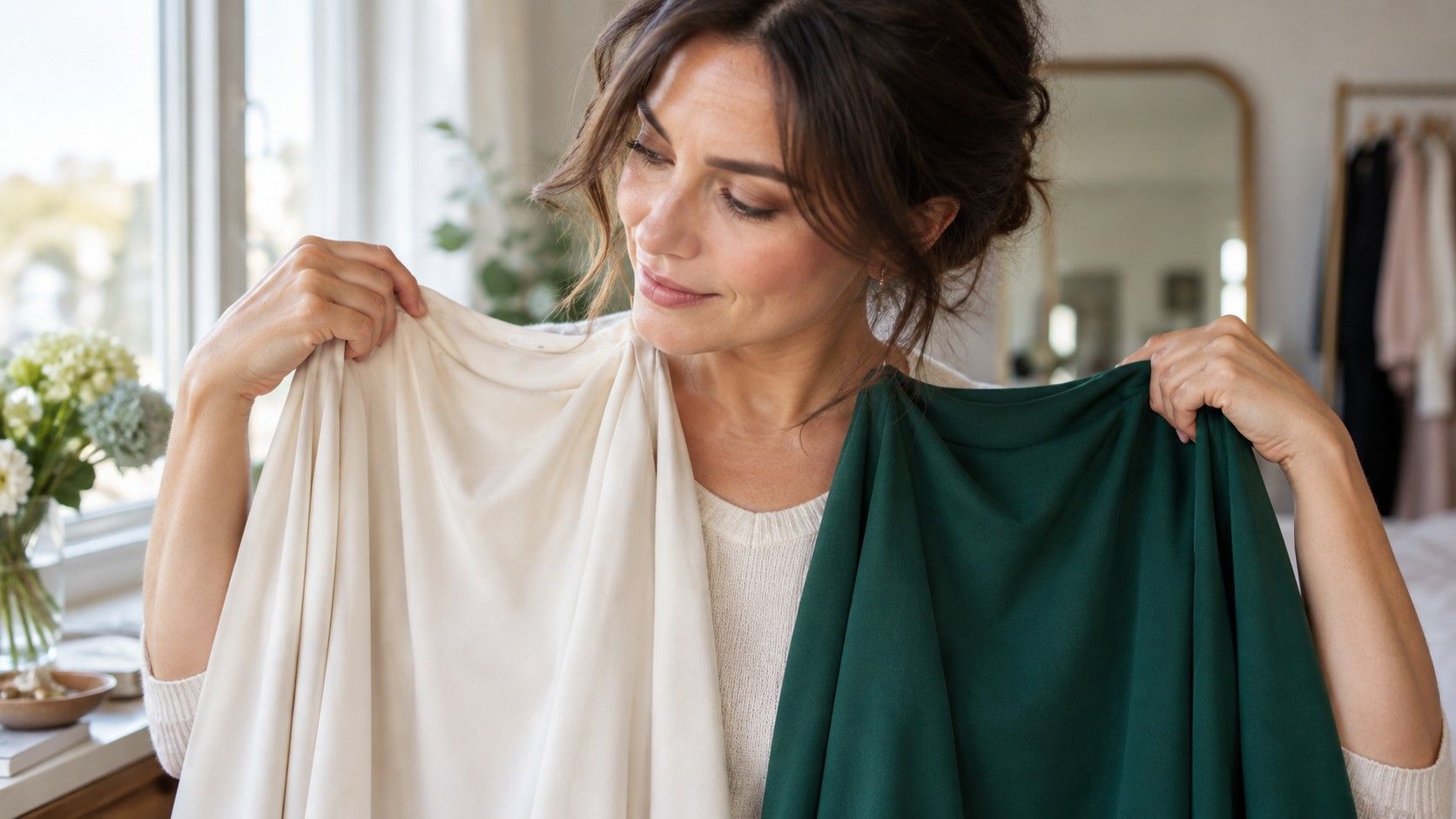
Start with white. Hold a clean optic-white towel and a creamy ivory or ecru towel under the chin, one at a time. Do not search for a dramatic transformation. Notice whether your under-eye area appears deeper, whether redness jumps forward, and whether the whites of the eyes seem clearer. Cool undertones often tolerate stark white well; warm undertones frequently look more rested beside ivory. Neutral skin may manage both, but one version will usually need less makeup to feel finished.
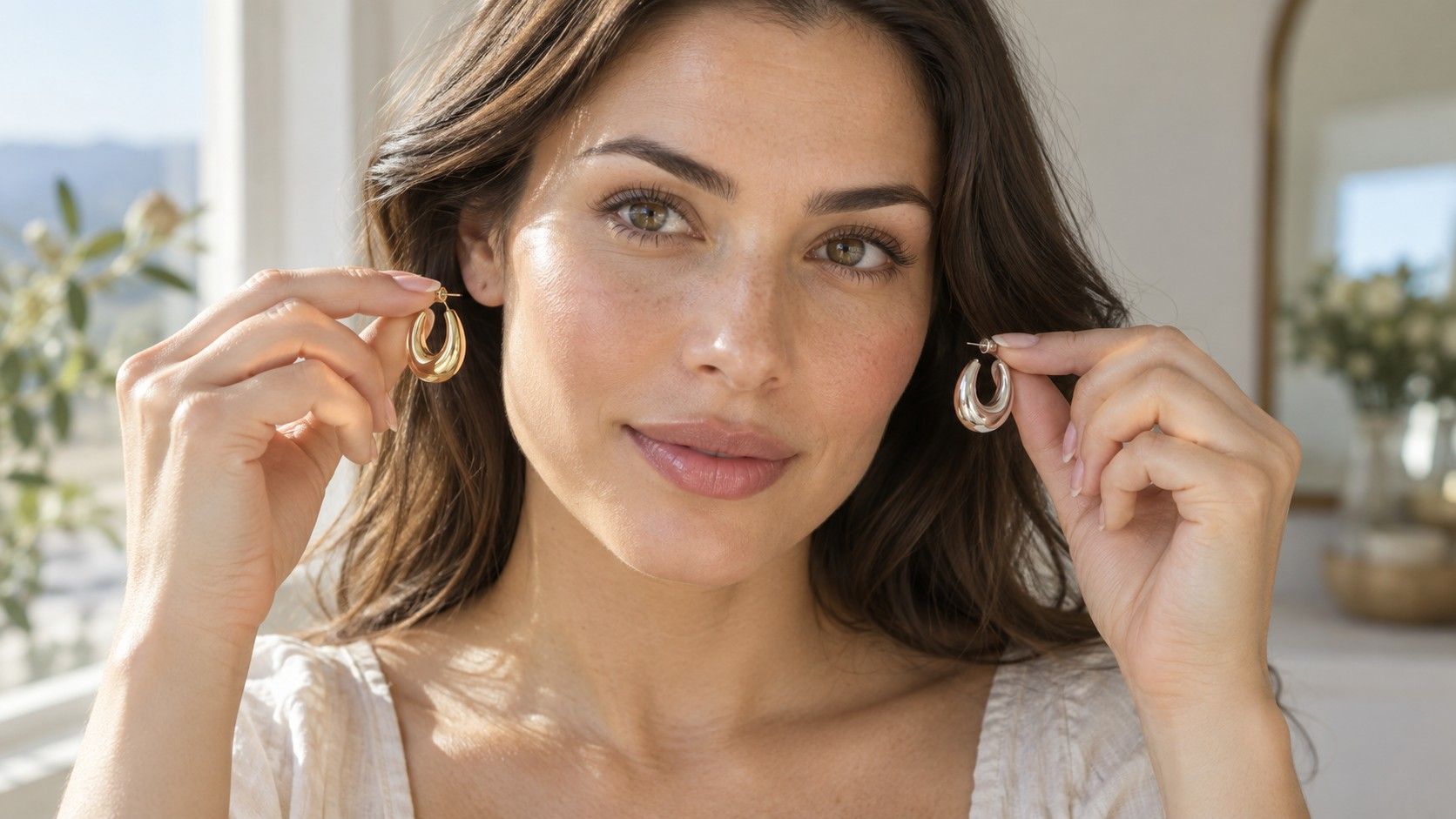
Next, try metal close to the face. Gold jewelry is often said to prove warmth, but the test is more nuanced than a single earring. Compare yellow gold with silver, white gold or a cool steel watch in the same light. Look at the jawline rather than the wrist. If yellow gold makes the face look gently lit while silver makes it look pale, warmth is plausible. If silver sharpens the eye area and gold turns skin yellow, coolness is plausible. When both look natural, neutral is a sensible working result.
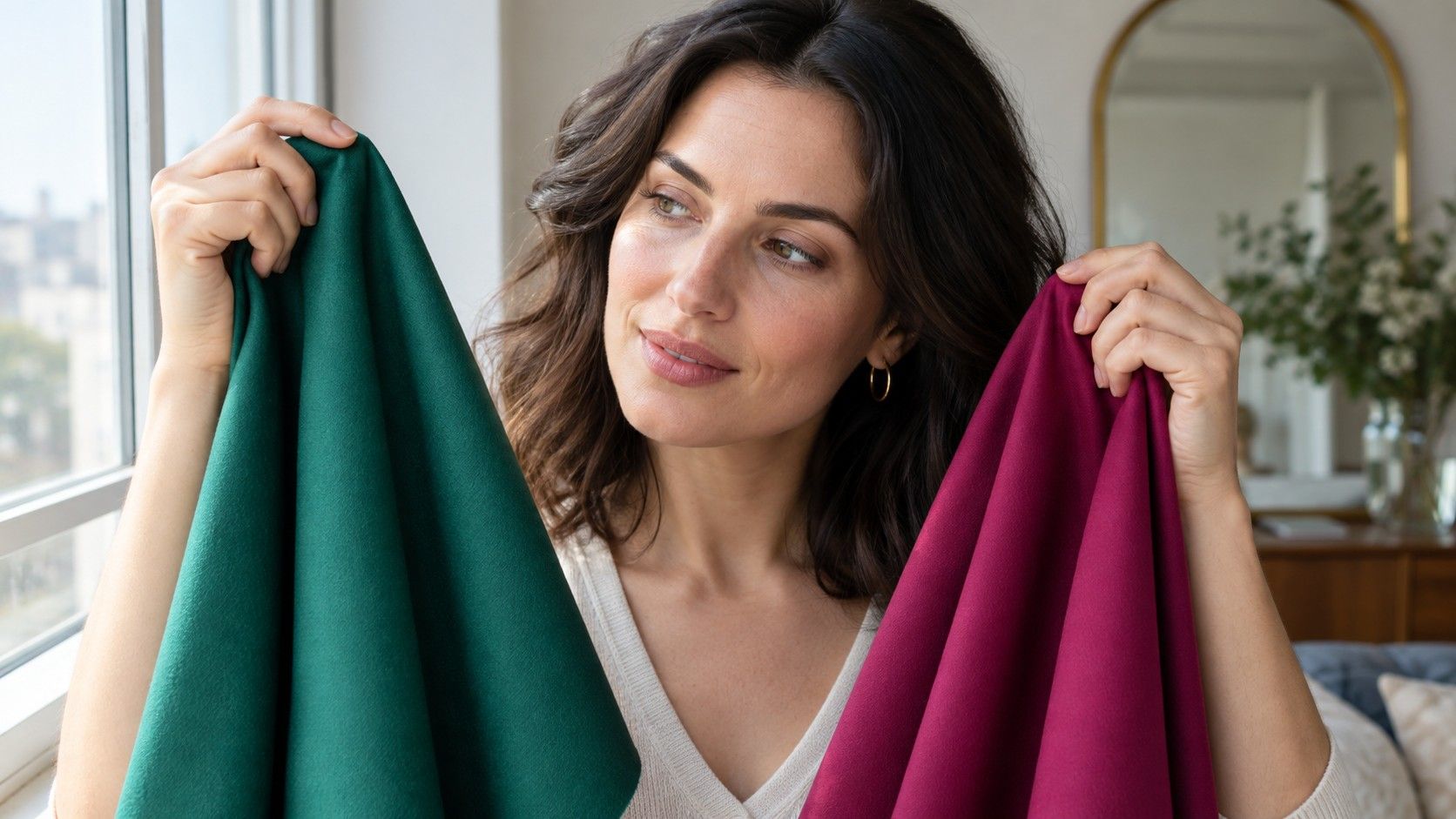
The third comparison is a pair of coloured drapes. Use a tomato red against a blue-red berry, coral against cool pink, or mustard against clear lemon. Fold T-shirts, scarves or paper shopping bags into a broad strip and keep the neckline uncovered. One shade may make facial shadows look stronger; the other may make lips and eyes show up without effort. Repeat the test on two separate days. A result that survives different weather is more useful than a dramatic moment under one lamp.
| Comparison | Look for | Common false clue |
|---|---|---|
| Optic white vs ivory | Evenness around eyes and mouth | Choosing the white that merely looks cleaner on the towel |
| Yellow gold vs silver | Whether the jawline looks awake or dull | Letting a favourite piece of jewelry decide |
| Warm red vs berry red | Redness, shadow and eye clarity | Judging the colour itself instead of the face beside it |
What veins, freckles and tanning can tell you
Veins are a small clue, not a final answer. Blue-purple veins are often associated with cool undertones and greenish veins with warm ones, but skin thickness, circulation and olive colouring alter what you see. On some wrists the veins appear blue in one area and green in another. If that happens, record the clue as mixed rather than trying to force it to settle the whole undertone analysis.
Freckles and a tan can also distract from the underlying pattern. Golden freckles may sit on cool skin; temporary tanning products can warm the surface dramatically; post-blemish marks can add red or brown patches that are unrelated to undertone. Test the neck and upper chest as well as the cheeks, ideally after removing makeup. Those areas tend to be less altered by blush, shaving irritation or high-colour skincare.
Foundation counters encourage a fast answer because a shade name must be selected. Take that answer cautiously. Brands use warm, cool and neutral differently, and a shade may oxidise after fifteen minutes. Swatch three likely shades along the jaw, leave the store window rather than standing under spotlights, and see which one disappears into both face and neck. That exercise is useful for makeup, but it should not outweigh repeated clothing comparisons.
How neutral undertones behave in real colours
Neutral does not mean every colour is equally flattering. It usually means the face can carry a little warmth and a little coolness without immediate conflict. Many neutral people look best in versions that are softened rather than extreme: oyster instead of icy white, raspberry instead of electric fuchsia, muted teal instead of either neon turquoise or muddy khaki. Contrast level still matters. A very pale neutral face can be overwhelmed by black even if the temperature is acceptable.
Try building a small neutral test rail: soft white, medium navy, taupe, muted rose, teal and a medium berry. Wear each near the face for a few minutes, not just a mirror glance. A colour that works often makes the boundary between skin and neckline look intentional. A colour that fights you can make the nose, chin or under-eyes appear more prominent before you have even noticed the garment.
Some people find that their result changes between polished outfits and bare-faced weekends. That does not necessarily mean the test failed. Makeup, hair colour and contrast from glasses can widen the range of colours you can wear. Your natural best shades are a useful base; styling choices can deliberately shift the effect when you want a sharper, warmer or more dramatic look.
Use the result as a hypothesis, not a label
A good skin undertone test gives you a shortlist to test in shops, not a reason to discard half a wardrobe. Keep two or three winning comparisons on your phone: perhaps ivory over optic white, berry over coral, and silver over bright yellow gold. When trying on a new blouse or knit, hold it by a window and ask the same concrete questions: does it deepen shadows, exaggerate redness, or clarify the eyes?
Give yourself permission to revise the answer. Hair dye, a tan, changing glasses and even a different level of makeup can alter the colours that feel easiest. The stable part is the method: use daylight, compare like with like, and watch the face rather than the fabric. That is more dependable than a filter, a vein chart or a label attached after one afternoon.